
Where Kiwis can place an MMA bet, how the odds are built, and what the 2026 law actually allows
 Available in US

Current as of October 30, 2026 · Verified against the Racing Industry Act 2020 and the Department of Internal Affairs’ published guidance
The picture of MMA betting in New Zealand changed completely on 28 June 2025. Before that date, a Kiwi punter with an interest in the UFC had a dozen offshore bookmakers to choose from. After it, the field narrowed to two names, and both belong to the same operator. This page explains what that means for anyone wanting to back a fighter, how the prices on a fight card are actually built, where the bet types sit, and which corners of the market the monopoly does not cover, from live in-play wagering to crypto deposits.
Crypto, Bitcoin and pseudonymous MMA betting
The phrase “MMA betting with Bitcoin” pulls significant search volume, and for good reason: crypto sportsbooks have marketed hard at fight fans for years. The reality in New Zealand is simpler and harsher than the marketing. Only TAB NZ may offer racing and sports betting to a person in New Zealand, and the change took effect on 28 June 2025 when section 74AAA of the Racing Industry Act 2020 came into force. The Department of Internal Affairs told unlicensed providers to withdraw with immediate effect, and the online-gambling duty on offshore operators does not change a single word of that prohibition.

The question then is not whether an offshore crypto bookmaker accepts New Zealand dollars, Bitcoin, Ethereum or USDT; the question is whether the operator is breaking New Zealand law by offering the bet at all. It is. The penalty for breaching section 74AAA sits on the operator, not the player, and no published prosecution of an offshore crypto sportsbook was found. What was published is the Department of Internal Affairs’ warning to players: an overseas operator may sit in a jurisdiction with minimal consumer safeguards, may not return unspent credits, and may not pay out large wins. That is the picture of crypto MMA betting from a New Zealand address: the betting happens, the bettor receives no New Zealand protection, and the operator is unlawful in doing it.
TAB NZ’s own terms set the payment methods a New Zealand punter can actually use, and the list comes from TAB NZ alone, not from statute. No statutory rule on card, bank transfer, credit, prepaid card or cryptocurrency was found. Opening a TAB NZ account requires a verified New Zealand address and identity document, which rules out the pseudonymous onboarding most crypto sportsbooks offer. A punter who wants to bet on a UFC card from a wallet rather than a bank account has, in practice, only the unlawful route.
The pivot worth understanding: a blockchain ledger and a betting licence are separate questions. A crypto sportsbook can offer instant settlement and minimal identity checks and still be unlawful in New Zealand; the speed of the deposit does not change the legal status of the bet. The crypto angle is, for the New Zealand reader, a question about which operator is breaking the law, not about which technology is on offer.
Live in-play MMA betting and cash out
Live in-play betting is the segment of MMA wagering that grew fastest through the early 2020s: prices update between rounds, after knockdowns, after takedowns and after significant strikes, and a punter who reads momentum can find edges a pre-match market cannot. TAB NZ lists live betting in its apps, and the product is real. The market list of TAB NZ comes from its own published terms; any statutory restriction on in-play markets is not established, which means the constraint is product-level, not law-level.
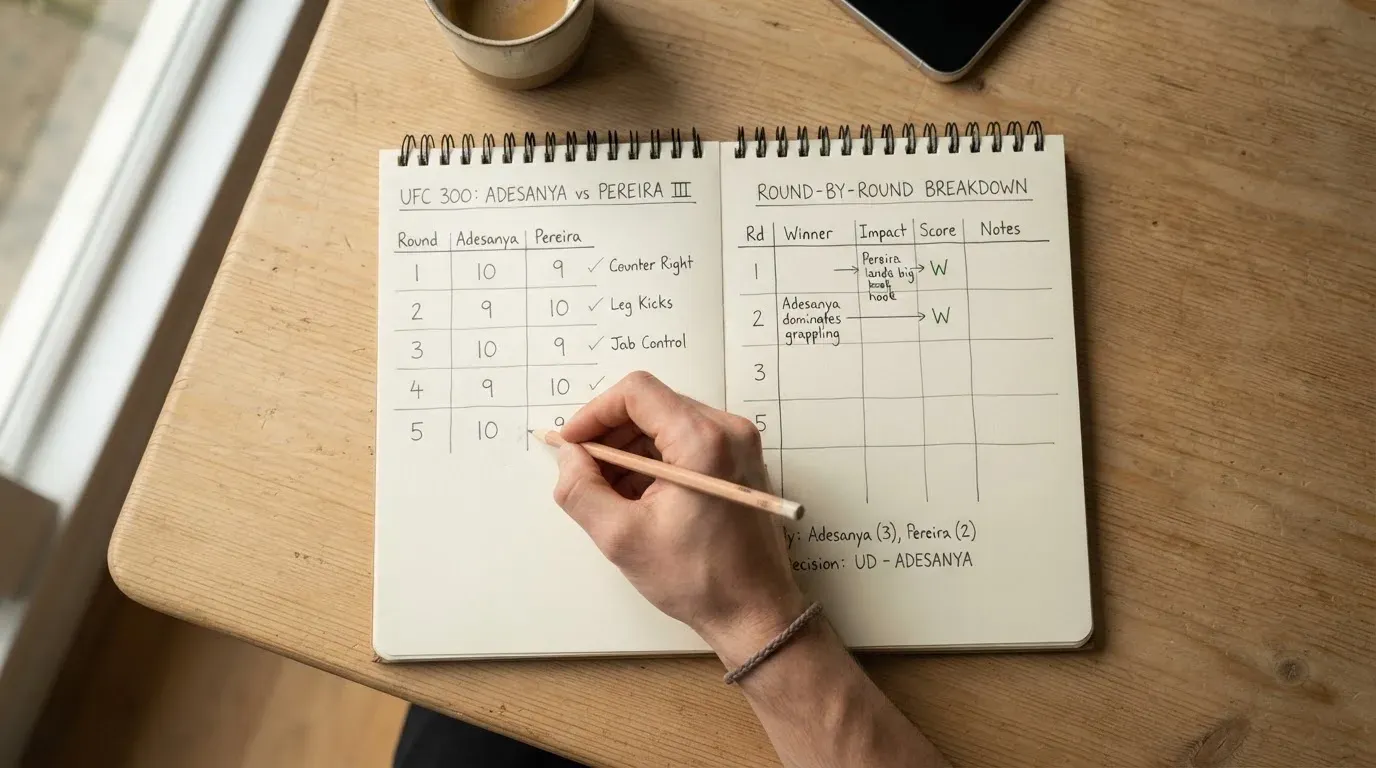
The mechanical question is how live prices are built. A live market is a series of snapshots: the price after the first round is one number, after a knockdown it shifts, after a submission attempt it shifts again. Each snapshot is a two-way or three-way market on the same fight, with its own margin baked into the decimal odds. The bookmaker’s margin is the difference between what the punters collectively stake and what the bookmaker pays out; it sits inside every price, live or pre-match, and is the cost a punter pays for the privilege of having someone else set the line.
A live bet on MMA carries the same settlement risk as any other in-play wager: the price a punter clicks is the price that settles, even if the next round changes the fight. Cash out, where it is offered, lets a punter lock in a return before the fight ends, at a price the bookmaker sets at that moment. Cash out is a feature, not a right, and the price is always the bookmaker’s, not the market’s. A punter who uses cash out after a bad round is taking the bookmaker’s number, not the true price of the fight at that instant.
The practical sequence: open the TAB NZ app, find the live UFC card, see the current prices and the markets on offer, place the bet at the displayed odds, watch the fight, and either let the bet run or use cash out if it is available. The constraint is product-level: TAB NZ’s live markets are what TAB NZ’s terms publish on a given night, and a punter who wants the broader live coverage some offshore books offer will not find it through a lawful New Zealand route.
Predictions, tips and the bankroll problem
Searches for “MMA bet tips”, “MMA betting predictions” and “MMA bets today” all ask the same question: who is going to win? The honest answer is that nobody knows. A tipster who claims certainty is selling certainty, and a punter who pays for it is buying a story about a fight whose outcome is determined inside a cage by two athletes. The tools that sharpen an MMA bet are not predictions: they are the underlying numbers, the matchup data, the recent form, the style clash, and the price the bookmaker is offering relative to the true probability of each outcome.
The Discipline of the bankroll is the only edge a recreational punter controls. A punter who prices the odds against their own probability estimate and walks away from a card when the prices do not make sense controls the only variable they can.
What the price actually says: decimal odds of 2.10 imply a roughly 47.6% chance of winning, before the margin is stripped out. A punter who believes the true probability is 55% has found a price worth taking; a punter who believes it is 45% has not. The calculation is arithmetic, and the arithmetic is the same whether the fight is a heavyweight title bout or a regional undercard. The fight changes; the pricing logic does not.
The tip industry, for its part, is built on volume. A tipster who posts fifty picks a month and hits 30% of them at long prices looks impressive in a screenshot, but the margin on those prices was likely 6–8% before a bet was even placed, and the tipster’s record does not strip that out. A punter who follows a tipster record blindly is paying the tipster and the bookmaker, and the order of the two payments is the only thing that changes.
Bet types, odds and the price of a multi
The MMA betting calculator exists because the bet types are not always obvious. A punter betting on a fight can back the winner (a moneyline bet, the simplest market), bet on the method of victory (KO/TKO, submission, decision), bet on the round the fight ends, or combine several of these into a multi. Each market has its own margin, and the margin of a multi is the product of the margins of its legs, minus the overround baked into the combination.
A multi, also called an accumulator or a parlay, multiplies the decimal odds of each leg into one price. A two-leg multi at 1.80 and 2.00 pays 3.60; a three-leg multi at 1.80, 2.00 and 1.90 pays 6.84. The payout share of the multi is the product of the payout shares of the individual legs, so the margin of the combined bet is wider than the margin of any single leg. A multi is a more expensive way to bet than a single, in the same way a combo meal costs more per item than buying the parts separately. The trade-off is the upside: a multi pays more for the same stake, and the punter trades margin for the chance of a bigger return.
The UFC’s 11 weight divisions (eight men’s, three women’s) produce cards of roughly a dozen fights each, and a punter who builds a multi across a full card is paying 12 layers of margin. The expected value of that bet, before any knowledge of the fights, is already below one. A punter who reduces the multi to two or three carefully priced legs and singles on the rest is spending less of the stake on margin and more on the picks.
TAB NZ’s same-game multi (SGM) lets a punter combine legs from a single fight, such as the winner, the method and whether the fight goes the distance. The product is useful, the pricing is TAB NZ’s, and the margin is the same as any other multi. SGM legs come from one event, which means a punter who knows a fight deeply can price each leg against the others; a punter who does not is paying margin on correlated outcomes without the benefit of the correlation analysis.
A worked example for a single fight, illustrating the margin of a two-way market: at decimal odds of 1.90 and 1.90, the implied probability of each outcome is 1 ÷ 1.90, or roughly 52.63%. Add the two implied probabilities and the total is about 105.26%, which means the bookmaker’s margin is roughly 5.26%, or the payout share is about 94.74%. The price on each side is not 50/50; it is 47.4% each after the margin is stripped out, and a punter who backs the favourite at 1.90 is being asked to believe the fighter wins more than 52.6% of the time just to break even. The actual price of MMA fights varies; the structural point is that every market on every fight carries a margin, and the margin is the bookmaker’s take from every unit staked on the fight. The expected cost of a $100 bet on a market with a 5% margin, over a large number of identical bets, is roughly $5; the punter keeps roughly $95 across those bets, before any skill in picking the fights.
The UFC, the sport and the tournaments a punter can bet on
The Ultimate Fighting Championship (UFC) is the dominant MMA promotion and the one most New Zealand punters will look for first. It was founded on 12 November 1993, when UFC 1 was held at McNichols Sports Arena in Denver, Colorado. The promotion runs roughly 40 events a year, and its championship structure is built around 11 weight divisions: eight for men and three for women. A title fight is sanctioned for five rounds of five minutes each; a non-title bout is normally three rounds, and the Unified Rules of mixed martial arts give a one-minute rest between rounds.
Judging uses the 10-point must system: three judges score each round, the round winner gets 10 points, the loser 9 or fewer, and an even round is scored 10–10. A decision can be unanimous, majority or split; a draw can be unanimous, majority or split as well. A bout ends in disqualification if an intentional foul incapacitates a fighter, and in a no contest if an unintentional foul incapacitates a fighter. These are the rules the bookmaker settles on, and a punter who understands the scoring and the stoppage conditions prices fights differently from a punter who does not.
Beyond the UFC, the MMA calendar includes Bellator, ONE Championship, the Professional Fighters League (PFL) with its season format, and a long tail of regional promotions. Each promotion runs its own weight classes and its own title structures, and the depth of market coverage at TAB NZ depends on what TAB NZ’s own terms publish. Bellator and ONE bouts are sometimes priced when the card overlaps with a major betting market; regional cards are less reliably covered. A punter who wants the broadest MMA coverage from a lawful New Zealand source checks TAB NZ’s published market list before each event, because the list is the list, not a stated policy.
Esports betting sits in a separate legal category in New Zealand: whether esports wagering counts as “sports betting” under the Racing Industry Act 2020 is not established, and TAB NZ’s coverage of esports markets is a product decision, not a statutory one. The punter who treats an esports event like a sporting event for betting purposes must check the operator’s terms rather than assume the law treats them the same.
Comparing MMA bookmakers in New Zealand
The headline finding of any comparison is structural: TAB and Betcha are the two online brands of TAB NZ, and every other brand on this list is not licensed in New Zealand. They are not rivals to TAB NZ, they are not lawful alternatives, and they are not safe by virtue of being familiar. The table below sets out the landscape, the New Zealand status of each operator, and what the operator’s own terms say about the subject of this page.
| Brand | New Zealand status | Operator’s own terms on the subject |
|---|---|---|
| TAB | TAB NZ brand (one of two online brands) | TAB NZ apps list live betting; covers horse and harness racing, rugby union, rugby league and other sports pre-match and live; carries a 17+ App Store age rating and requires customers to be 18 or over |
| Betcha | TAB NZ brand (one of two online brands) | Covers horse, greyhound and harness racing plus rugby, NRL, MMA/UFC, NBA, NFL, tennis, cricket, football, motorsports and esports |
| Alawin | Not licensed in New Zealand | Sportsbook covers football, tennis, table tennis, basketball, ice hockey, American football and baseball, with live betting, virtual sports and esports offered; no New Zealand harm-minimisation framework reaches the brand |
| FunBet | Not licensed in New Zealand | Sportsbook offers odds on football, ice hockey, American football, basketball, volleyball, tennis, rugby and baseball, with live betting and a bookmaker described as open 24/7; no New Zealand complaints route |
| LegendPlay | Not licensed in New Zealand | Sportsbook has Sports, Live Betting and Virtual Sports sections, with football, tennis, basketball and ice hockey listed; brand names an Anjouan licence, which gives no right to take bets from people in New Zealand |
| Thunderpick | Not licensed in New Zealand | Esports-first, covering CS2, League of Legends, Dota 2 and Valorant; sportsbook offers a cash-out feature and markets from the Champions League to the NFL; brand names a Curaçao licence (OGL/2024/677/0722, holder Paloma Media B.V.) |
| Rabona | Not licensed in New Zealand | Launched 23 December 2019 as the sixth online sportsbook of the Soft2Bet group; brand names a Curaçao licence, which gives no right to take bets from people in New Zealand |
| RTbet | Not licensed in New Zealand | Sportsbook covers football, tennis, table tennis, basketball, ice hockey, American football and baseball, with live betting and virtual sports; brand names a Curaçao licence |
| Glorion | Not licensed in New Zealand | Pre-match and live betting, virtual sports, horse racing and esports, with markets grouped into popular, niche, indoor and outdoor sports plus entertainment events such as award shows and elections |
| BetNinja | Not licensed in New Zealand | Casino welcome advertised as EUR 1,000 bonus and 100 free spins, with a sports offer of a 100% match up to EUR 100 on the first deposit; brand names a Union of the Comoros licence |
The column on operator’s terms is what the brand publishes; the column on New Zealand status is what the law says. The two columns do not agree, and the disagreement is the point. A punter who wants a New Zealand harm-minimisation framework, a New Zealand complaints route, and the protection of section 74AAA chooses TAB or Betcha; a punter who wants broader market coverage or a different payment method chooses an offshore brand and accepts the position the Department of Internal Affairs has published about it.
The core of MMA betting in New Zealand
MMA betting in New Zealand is, at its core, the act of staking money on the outcome of a mixed martial arts contest. The contest can be a UFC title fight, a Bellator main event, a ONE Championship bout or a regional card; the market can be a moneyline bet on the winner, a method-of-victory bet, a round bet, an over/under on the total rounds, or a combination of these. The mechanics are the same as betting on any other sport: the punter backs an outcome at a price, the bookmaker holds a margin inside that price, and the bet settles on the result.
What changes the picture in New Zealand is who is allowed to take the bet. Section 74AAA of the Racing Industry Act 2020, in force from 28 June 2025, names TAB NZ as the only provider lawfully offering racing and sports betting to people in New Zealand. The Department of Internal Affairs is the regulator under the Gambling Act 2003 and monitors compliance with the betting prohibition. There is no licence to apply for and no licence register for bookmakers, because there is only one lawful provider.
The implications spread from there. TAB NZ takes fixed-odds and tote (pool) bets; its published betting rules define a long list of bet types from Win and Place on racing to Multis and Same Game Multis on sports. The market list of TAB NZ comes from its own terms, which means the breadth of MMA coverage on a given night depends on what TAB NZ has decided to publish. A punter who wants a market TAB NZ does not offer has, lawfully, no New Zealand route to it.
TAB and Betcha are the two online brands of TAB NZ. They are run by Entain under a 25-year agreement signed in 2023 that gives Entain a 50/50 share of gross profits, with at least $150m a year going to TAB NZ for the first five years; Entain pledged a one-off $100m payment to the racing sector at signing. The two brands are not rivals; they are the same operator on different platforms, and a punter who holds an account at one can move funds to the other without paperwork.
The age for TAB NZ betting is 18; land-based casinos are 20. Betting under 18 is an offence under section 89 of the Racing Industry Act 2020. TAB NZ accounts need a verified New Zealand address and identity document, and the onboarding process is the gate that keeps the under-18s out. A punter who tries to open a TAB NZ account with a false address or a borrowed ID is committing an offence, and the account will be closed when the discrepancy is found.
The legal frame, the offshore problem and what “not licensed” means
The legal frame is the Racing Industry Act 2020 as amended in 2025, and the change that matters is section 74AAA. No person other than TAB NZ may offer racing betting, sports betting or other racing or sports betting to a person in New Zealand, regardless of where that person is resident or incorporated. The change took effect on 28 June 2025, and the Department of Internal Affairs told providers serving New Zealand to withdraw with immediate effect. The law does not geo-block offshore websites; it puts liability on the offshore operator.
The framing matters because it shifts who is in trouble. A punter who places a bet with an offshore bookmaker is not, under section 19(4) of the Gambling Act 2003 (inserted in 2025), liable to be convicted for placing the bet; the liability sits on the operator, not the player. No published penalty for a player was found. What was published is the Department of Internal Affairs’ warning to players, and that warning is worth quoting in spirit: an overseas operator may be in a jurisdiction with minimal consumer safeguards, may not return unspent credits, and may not pay out large wins. A punter who takes that warning seriously is making a judgment about the counterparty, not about the law.
The offshore brands on this page sit in three licence jurisdictions. Thunderpick and Rabona name Curaçao licences; LegendPlay names an Anjouan Gaming Authority licence; BetNinja names a Union of the Comoros licence; Alawin, FunBet, RTbet and Glorion name no licence that applies in New Zealand. None of these jurisdictions gives the operator a right to take bets from people in New Zealand; the New Zealand law overrides the offshore licence because the customer is in New Zealand. The offshore licence is a permit to operate from that jurisdiction, not a permit to serve New Zealand.
The greyhound wrinkle: greyhound racing is closing in stages from 1 August 2026, and from that date offshore operators may not take bets on greyhound races either. The wider ban is in place before that date. A punter who backs a greyhound race through an offshore bookmaker before 1 August 2026 is using an operator that is already unlawful for the broader reason, and the greyhound closure is a tightening of a rule that was already in force.
The Online Casino Gambling Act 2026 licenses online casino gambling only and does not license sports betting. TAB New Zealand winning the right to apply for a casino licence does not extend the betting monopoly, and a punter who sees a TAB NZ casino offering must not assume the betting monopoly has loosened. Casino and betting are separate permits with separate rules, and the casino law has no bearing on which bookmaker can take a UFC bet.
The tax frame: for the player, Inland Revenue guidance says recreational gambling winnings are generally not taxable, and prize money from TAB horse, dog and trotting races is not taxable; a person who bets as a business is a different case and must consult Inland Revenue or an accountant. The operator side is more complex: TAB NZ pays the Problem Gambling Levy of 0.74%, in force from 1 July 2025 to 30 June 2028; overseas operators supplying New Zealand residents pay online gambling duty (12% of profits since 1 July 2024, 16% from 1 January 2027), but a duty being payable does not make an offer lawful. The point-of-consumption charge on offshore racing and sports bets ceased on 30 June 2026.
Responsible gambling and the tools the monopoly provides
The harm-minimisation framework that reaches a TAB NZ account is built into the app. TAB NZ lists deposit limits, time-outs and self-exclusion in its apps, and an exclusion applies across its brands (TAB and Betcha). A punter who self-excludes from TAB cannot open a Betcha account, because the two brands share the same operator-level exclusion. The age rating on the New Zealand App Store is 17+, but customers must be 18 or over to bet; the App Store rating is a content guideline, not the legal age.
The free Gambling Helpline is 0800 654 655, and the text line is 8006; both run 24 hours. Safer Gambling Aotearoa provides face-to-face and online support across the country. The Problem Gambling Levy of 0.74% of TAB NZ’s gross profits funds treatment and prevention services, and the levy runs to 30 June 2028.
The offshore brands do not provide any of this. A punter who self-excludes from a TAB NZ account and then opens an offshore account has bypassed the exclusion, and the offshore operator has no New Zealand framework to honour the original self-exclusion. The Department of Internal Affairs’ warning about minimal consumer safeguards at offshore operators is, in part, a warning about exactly this: a punter who hits a wall at TAB NZ and walks to an offshore book is not getting a second chance at a controlled environment; they are getting a different environment, with different rules, and no New Zealand oversight.
The register the casino law will require is for online casinos only; there is no single national online-betting exclusion register. The TAB NZ app is the only register that covers MMA betting, and the only exclusion that carries New Zealand harm-minimisation weight is the one a punter sets through that app. A punter who wants to stop betting on MMA and has only ever used offshore brands has fewer tools, and the tools they do have are the ones the offshore operator chooses to publish.
Operator reviews
TAB
TAB is the older of the two TAB NZ online brands, and the one most New Zealand punters grew up with. The app covers horse and harness racing, rugby union and rugby league and other sports, pre-match and live, and includes Trackside live race streaming with in-app betting, racing form, Blackbook and Jockey Challenge tools, and a simplified wallet for deposits and withdrawals. The app is published on the New Zealand App Store under the seller name New Zealand Racing Board and was first released on 8 September 2014; the platform has had a decade to settle into the New Zealand market.
For MMA, the product is what TAB NZ’s terms publish on a given night. UFC cards are typically priced when they overlap with major markets, and the depth of coverage (moneyline, method of victory, round betting, over/under) depends on the card. Live betting is listed in the app. The 17+ App Store age rating sits alongside the 18-or-over requirement; the legal age for betting is 18, and the app enforces it at account opening.
The verdict: TAB is the default MMA bookmaker for a New Zealand punter who wants the harm-minimisation framework, the verified-operator protection, and the option of pooling bets through the same wallet they use for racing. The breadth of MMA markets is narrower than some offshore books, and the depth of live in-play pricing is a product decision, not a market constraint. TAB serves the New Zealand punter looking for regulatory security.
Betcha
Betcha is the second TAB NZ online brand, published on the New Zealand App Store by Entain New Zealand Limited and first released on 6 August 2024. The brand was built for the New Zealand market, and the App Store listing covers horse, greyhound and harness racing plus rugby, NRL, MMA/UFC, NBA, NFL, tennis, cricket, football, motorsports and esports. The MMA/UFC line in that list is the relevant one for this page.
The product surface is the same as TAB at the operator level: same wallet, same exclusions, same New Zealand harm-minimisation tools. The brand presentation is different: Betcha is the newer, mobile-first face of TAB NZ, and the app is built for a punter who wants the markets on a phone rather than a desktop. The 25-year partnership between TAB NZ and Entain runs both brands, and the Entain technology stack is what the punter is betting on when they open the Betcha app.
The verdict: Betcha is the right TAB NZ brand for a punter who wants the MMA/UFC coverage specifically called out in the product description and is comfortable with a mobile-only experience. The breadth of MMA markets is the same as TAB in practice, because the operator is the same; the difference is the interface and the marketing positioning. A punter who finds the TAB app cluttered can move to Betcha without paperwork, and a punter who wants the older, more comprehensive TAB product stays where they are.
Alawin
Alawin is an offshore sportsbook whose home page lists football, tennis, table tennis, basketball, ice hockey, American football and baseball, with live betting, virtual sports and esports also offered. The front page does not mention MMA, suggesting the UFC is not a core focus. A punter who lands at Alawin from an MMA search has arrived at a book whose first instinct is a different sport.
The New Zealand status is the structural problem. Alawin is not licensed in New Zealand, names no licence that applies in New Zealand, and no New Zealand complaints route or harm-minimisation framework reaches it. The Department of Internal Affairs’ warnings about minimal consumer safeguards at overseas operators, unspent credits not being returned, and large wins not being paid out are the operating environment a New Zealand punter is walking into.
The verdict: Alawin suits a punter who wants a sportsbook with a broad pre-match and live offering across the major North American and European sports. The MMA product is thin, local protections do not apply, and the legal status follows the Department of Internal Affairs’ published stance. Anyone seeking deeper MMA coverage is advised to review other options listed here.
FunBet
FunBet is an offshore sportsbook whose home page offers odds on football, ice hockey, American football, basketball, volleyball, tennis, rugby and baseball, with live betting and a bookmaker described as open 24/7. The site does not highlight MMA coverage. A punter who wants an MMA market at FunBet is asking a book whose product page does not feature the sport.
The New Zealand status is the same as the other offshore brands on this list: not licensed in New Zealand, no New Zealand complaints route, no New Zealand harm-minimisation framework, and the Department of Internal Affairs’ published warnings about minimal consumer safeguards, unspent credits, and large-win non-payment. The 24/7 framing is a customer-service pitch, not a regulatory one.
The verdict: FunBet suits a punter who wants a sportsbook with a deep team-sports offering and round-the-clock customer service. The MMA product is thin, local protections do not apply, and the legal status follows the Department of Internal Affairs’ published stance. Offshore brands that list the sport prominently provide a more relevant MMA experience.
LegendPlay
LegendPlay is an offshore sportsbook with Sports, Live Betting and Virtual Sports sections, with football, tennis, basketball and ice hockey listed. The brand names an Anjouan Gaming Authority licence, a foreign permit that holds no legal standing in New Zealand for betting. Combat sports are not a front-page feature here.
The Anjouan licence is a permit to operate from that jurisdiction, an offshore authorisation that New Zealand does not recognise for betting operations. The structural point applies to every offshore brand on this list, and LegendPlay is no exception; the Department of Internal Affairs’ warnings about consumer protection are the relevant reality.
The verdict: LegendPlay suits a punter who is comfortable with an Anjouan-licensed sportsbook and wants the major team sports with live betting. The MMA product is not established, local protections do not apply, and the legal status follows the Department of Internal Affairs’ published stance. TAB and Betcha remain the only lawful New Zealand operators for this activity.
Thunderpick
Thunderpick is an esports-first brand, covering CS2, League of Legends, Dota 2 and Valorant, and its sportsbook offers a cash-out feature and markets from the Champions League to the NFL. The brand names a Curaçao licence (OGL/2024/677/0722), holder Paloma Media B.V. MMA is not a primary focus here.
The cash-out feature is worth noting: it is the explicit product surface a punter looking for in-play exit options will see. The Curaçao licence is an offshore authorisation that New Zealand does not recognise for betting operations. The Department of Internal Affairs’ warnings about consumer protection remain the key consideration.
The verdict: Thunderpick suits a punter who wants an esports-first product and values the cash-out feature for in-play exit. Crypto-focused esports bettors might find this alignment more fitting than traditional sportsbooks.
Rabona
Rabona is an offshore sportsbook launched on 23 December 2019 as the sixth online sportsbook of the Soft2Bet group. The Soft2Bet group’s broader product list includes casino, live casino and sports; whether the brand covers MMA is not confirmed.
The structural point applies: the New Zealand law overrides the offshore licence, the New Zealand complaints route does not reach the brand, and the Department of Internal Affairs’ warnings are the operating environment. The launch date and the group affiliation are useful background for a punter who wants to know how long the brand has been operating and which group it belongs to.
The verdict: Rabona suits a punter who is comfortable with a Curaçao-licensed sportsbook and is interested in the Soft2Bet group’s broader product offering. This platform is an established international brand, though it operates without New Zealand regulatory approval.
RTbet
RTbet is an offshore sportsbook whose home page covers football, tennis, table tennis, basketball, ice hockey, American football and baseball, with live betting and virtual sports. The brand names a Curaçao licence, an offshore authorisation that New Zealand does not recognise for betting operations. MMA is not a listed feature.
The structural point applies: the New Zealand law overrides the offshore licence, the New Zealand complaints route does not reach the brand, and the Department of Internal Affairs’ warnings are the operating environment. The live betting and virtual sports are the product surface a punter looking for in-play and computer-simulated markets will see.
The verdict: RTbet suits a punter who wants live betting and virtual sports alongside the major team sports, and is comfortable with a Curaçao-licensed brand. This operator is comparable to other offshore platforms, with the same caveats regarding local regulation.
Glorion
Glorion is an offshore sportsbook offering pre-match and live betting, virtual sports, horse racing and esports, with markets grouped into popular, niche, indoor and outdoor sports plus entertainment events such as award shows and elections. The brand names no licence that applies in New Zealand, an exposed regulatory position. MMA is not a listed feature.
The entertainment markets are a distinguishing surface: award shows and elections are not a standard sportsbook offering, and a punter who wants novelty markets has a narrower field than the team-sports punter. The lack of a named licence is a red flag the punter must weigh against the broader market list, and the New Zealand law overrides whatever regulatory status the brand holds in its operating jurisdiction.
The verdict: Glorion suits a punter who wants the broadest product offering on this list, including entertainment markets, and is willing to accept a brand that names no applicable licence. This operator provides variety, but lacks the New Zealand harm-minimisation framework.
BetNinja
BetNinja is an offshore brand that advertises a casino welcome of EUR 1,000 bonus and 100 free spins, and a sports offer of a 100% match up to EUR 100 on the first deposit. The brand names a licence from the Union of the Comoros, which gives no right to take bets from people in New Zealand. The product pitch is split between casino and sports, and MMA coverage is not confirmed.
The bonus framing is a useful illustration of what a New Zealand punter is reading when they land at an offshore book: a headline number, a match percentage, and a free-spin count. The 100% match up to EUR 100 is a deposit-gated offer whose true cost is the wagering requirement the punter has not yet read. A punter who is drawn to a 100% match without reading the fine print is the punter the offer is built for, and the fine print is where the cost lives.
The structural point applies: the New Zealand law overrides the Comoros licence, the New Zealand complaints route does not reach the brand, and the Department of Internal Affairs’ warnings are the operating environment. The punter who wants a New Zealand harm-minimisation framework chooses TAB or Betcha; the punter who has decided to go offshore reads the terms of the offer, including the wagering requirement, the minimum price for a qualifying bet, and the deadline.
The verdict: BetNinja suits a punter who wants both a casino and a sports product under one account. Anyone considering the headline bonus offer must price the deal against the wagering requirement.
How the odds are built: the bookmaker’s margin in practice
The bookmaker’s margin is the difference between what the punters collectively stake on a market and what the bookmaker pays out in winnings; it sits inside every decimal odds a punter sees, and it is the cost a punter pays for the privilege of having someone else set the line. The calculation is mechanical: take the implied probability of each outcome (1 ÷ decimal odds), add the implied probabilities together, and the total is greater than 100% by the margin. A market with a 5% margin pays out 95% of every unit staked, on average, across a large number of identical bets.
The worked example: at decimal odds of 1.90 and 1.90, the implied probability of each outcome is roughly 52.63%. Add the two and the total is about 105.26%, which means the margin is roughly 5.26% and the payout share is about 94.74%. The price on each side is not 50/50; it is about 47.4% each after the margin is stripped out, and a punter who backs the favourite at 1.90 needs the fighter to win more than 52.6% of the time just to break even. The actual price of MMA fights varies by card, by market, and by bookmaker; the structural point is that every market on every fight carries a margin, and the margin is the bookmaker’s take from every unit staked on the fight.
The condition that matters: a 5% margin is the average take on a perfectly balanced book; the actual take a bookmaker earns depends on how the punters bet, because a bookmaker pays out only on the winning side and keeps the losing stakes. A significantly lop-sided market (one fighter taking 90% of the handle) earns a different effective margin than a balanced one, and the headline margin is an average, not a guarantee. The punter who knows the margin of a market knows the cost of betting on it before any knowledge of the fights is brought in; the punter who does not is paying an unknown cost on every bet.
Frequently asked questions
How does MMA betting work?
MMA betting is staking money on the outcome of a mixed martial arts contest. A punter backs a fighter to win (a moneyline bet), the method of victory (KO/TKO, submission, decision), the round the fight ends, or the total number of rounds. The bookmaker publishes decimal odds on each outcome, and the payout is the stake multiplied by the odds. UFC title bouts run up to five rounds of five minutes each, and non-title bouts run three rounds, with one-minute rests between rounds.
How does someone bet on MMA?
A punter opens an account with a bookmaker, deposits funds, selects an MMA event, chooses a market (winner, method, round, over/under), enters the stake, confirms the bet, and waits for the fight to settle. In New Zealand, the lawful route is through TAB or Betcha, the two online brands of TAB NZ; other bookmakers on this page are not licensed in New Zealand, and using them places the punter outside the New Zealand harm-minimisation framework.
How does someone bet on MMA fights specifically?
The bet types are the same as for any combat sport. The simplest is the moneyline: back fighter A or fighter B. More complex markets include the method of victory (which can be KO/TKO, submission or decision), the round the fight ends, and whether the fight goes the distance. Multis combine several legs into one bet, multiplying the odds together; the margin of a multi is the product of the margins of its legs, and the expected cost of a multi is higher than the expected cost of any single leg.
Which bookmaker may lawfully take sports and racing bets in New Zealand?
TAB and Betcha are the two online brands of TAB NZ, and they are the only operators allowed to take online sports and racing bets from a person in New Zealand since 28 June 2025, when section 74AAA of the Racing Industry Act 2020 came into force. The Department of Internal Affairs told unlicensed providers to withdraw with immediate effect. There is no licence to apply for and no licence register for bookmakers, because there is only one lawful provider.
How is the return on a bet worked out from the stake and the odds?
The return on a winning bet is the stake multiplied by the decimal odds. A $10 bet at decimal odds of 2.50 returns $25, which is the $10 stake plus $15 in net profit. A multi combines several legs: a two-leg multi at 1.80 and 2.00 pays 3.60, so a $10 bet returns $36. The bookmaker’s margin sits inside the odds, and the payout share of a market is the reciprocal of the sum of the implied probabilities of all outcomes.
What is the bookmaker’s margin and how can it be seen in the odds?
The margin is the bookmaker’s take from every unit staked on a market, and it appears in the odds as the gap between the implied probabilities and 100%. At decimal odds of 1.90 and 1.90, the implied probability of each outcome is roughly 52.63%, adding to about 105.26%; the overround is the excess, roughly 5.26%, and the payout share is about 95.0%. A punter who knows the margin of a market knows the cost of betting on it before any knowledge of the fights is brought in.
Tennis, golf & more – cryptobetsnz
Content created by the «cryptobetsnz» team
